Blog
The New Power Couple
Back to Blog(s)
March 25 2024
March 25 2024
Why Custodians and Cleaning Robots are a Team to Watch
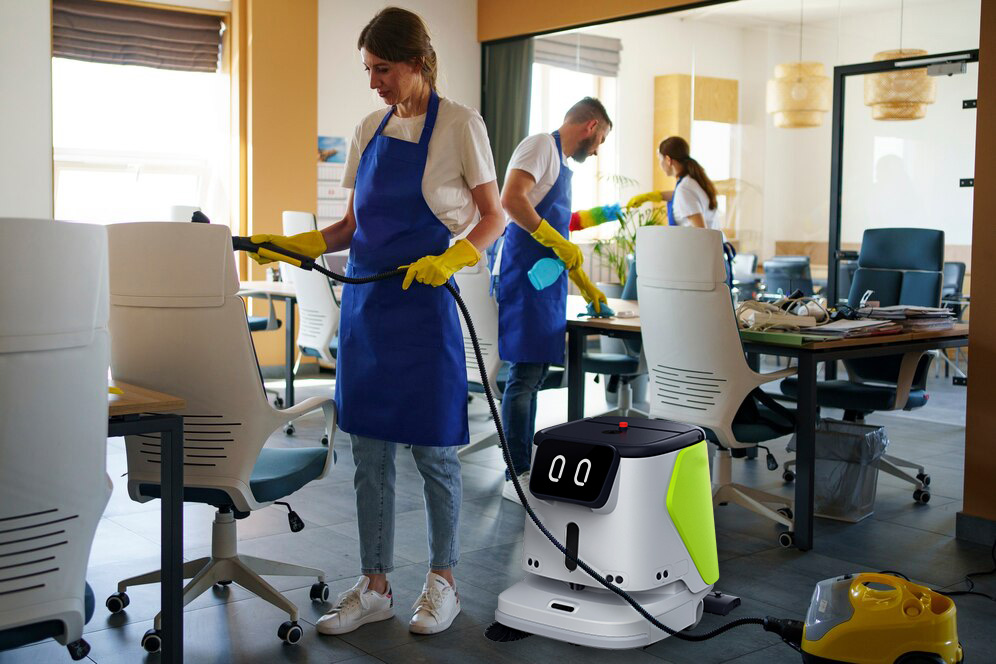
The Jan-San and cleaning industry is in the midst of a remarkable transformation with the integration of new technologies, foremost among them floor cleaning robots. While these robots are very efficient in autonomously managing routine cleaning tasks, an even greater synergistic potential lies in the collaboration between custodians and the robots they can count on as part of their “crew.” Let’s take a look at the symbiotic relationship between custodians and floor cleaning robots, and explore the numerous benefits that arise from this collaborative approach.
Custodians as Managers of Robotic Workforce
Custodians can play a pivotal role in overseeing and managing the deployment of floor cleaning robots. Instead of replacing custodians, these robots act as valuable tools that empower custodians to optimize their own roles. Custodians have the potential to upskill and become managers of the robotic workforce, ensuring that the machines are deployed strategically, monitored effectively, and integrated seamlessly into the overall cleaning strategy.
By taking charge of the individual robotic assets or multi-robot fleets, custodians not only enhance their own skill set, but also recoup valuable time that can be put to use towards more complex and specialized tasks. This shift allows them to utilize their skills and expertise in areas that can significantly enhance the overall cleanliness and maintenance of a facility, ultimately providing a more comprehensive and customized cleaning service.
Optimizing Cleaning Processes
The collaboration between custodians and floor cleaning robots enables an overall optimization of cleaning processes and workflows. While robots can very efficiently handle routine tasks such as sweeping, scrubbing, and mopping, custodians are given the freedom to devote energy to tasks that require a higher level of attention to detail, like cleaning intricate surfaces, sanitizing high-touch areas, or performing more complex maintenance work.
This smart division of labor ensures that each task is performed by the most suitable “worker”: floor cleaning robots excel at repetitive, labor-intensive tasks, while custodians bring a level of adaptability and critical thinking to more intricate aspects of cleaning. As a result, the cleaning process becomes more streamlined and efficient, delivering higher quality results in less time.
Covering More Ground Together
A combined team made up of custodians and floor cleaning robots significantly enhances the efficiency of cleaning operations. These robots can clean large areas very quickly, and to a remarkably high standard, covering many times the square footage per hour as a human janitor. Custodians, armed with the ability to manage and guide the robotic workforce, can strategize the deployment of these machines to maximize coverage and minimize cleaning time.
The type of efficiency-through-collaboration allows custodians to focus on additional tasks that contribute to the overall cleanliness and maintenance of a facility. This winning combination results in more ground covered, a more comprehensive clean, and a marked improvement in overall cleaning operations.
Enhancing Job Satisfaction and Morale
While custodial work is the backbone of any healthy building or facility, it can feel like a thankless job. It’s physically demanding, repetitive, and sometimes hazardous. But the incorporation of floor cleaning robots into the cleaning workforce has the potential to alleviate some of these burdens and enhance overall job satisfaction for custodial workers. By relieving custodians of one of the most repetitive and physically demanding cleaning tasks, floor cleaning robots allow these valuable workers to engage in more fulfilling aspects of their jobs. Custodians can take pride in managing and guiding a team of robots, as well as focusing on high-impact deep cleaning.
Additionally, the collaborative relationship fosters a sense of empowerment among custodians. Rather than viewing robots as a threat to job security, custodians should see them as high-tech tools that amplify their capabilities, making their roles more dynamic and rewarding. This shift in perspective contributes to a more positive work environment, where custodians feel valued and motivated to excel in their roles.
Data-Driven Decision Making
Data is everywhere in today’s world, and facilities of all sizes use it to optimize operations and allocate resources. But because commercial cleaning is still very analog, cleaning data is incredibly hard to come by. Even the most advanced manual floor scrubbers are only equipped with an hour meter, meaning they can record the amount of time a machine is in operation, but not much else. Autonomous floor cleaning robots are changing the game. They are capable of recording not just how long they run, but precise times of operation, exact square footage and locations cleaned, water and chemical usage, and more.
This type of hard data allows for more insightful decision making while also providing hard proof of completed cleaning tasks. Custodians can leverage this data to make informed decisions about cleaning schedules, resource allocation, and areas that require special attention. The integration of data-driven insights into the cleaning strategy ensures a proactive and efficient approach to facility maintenance. For example, if the data indicates increased foot traffic in a particular area, custodians can adjust cleaning schedules accordingly. This dynamic response to real-time information allows custodians to optimize their efforts and resources, providing a more effective and responsive cleaning service to meet the evolving needs of the facility.
Maximizing Resources
The collaboration between custodians and floor cleaning robots contributes to overall cost-effectiveness in facility maintenance. This synergy allows custodians to achieve more with fewer resources, optimizing their labor and cleaning supplies. And while the initial investment in robotic technology may seem significant, the long-term savings become evident as the efficiency of the cleaning process increases. For instance, because traditional floor cleaning methods take so much time out of a custodian’s day, many businesses could easily hire someone just to clean floors day-in, day-out.
But financially, it doesn’t make sense for most facilities to pay someone hourly wages or a salary, plus benefits and taxes, just to clean the floors. Logically, each new hire must be able to tackle a range of jobs to justify the expense. Floor cleaning robots can complete that repetitive task 24/7, making the initial purchase outlay far less than a janitor’s salary + benefits after one or two years, depending on the model. RaaS (robots as a service) models are another great option for accessing this reliable technology without excessive capital investment.
The New Dream Team
The exciting new collaboration between custodians and floor cleaning robots represents a significant leap forward in the evolution of the cleaning industry. Rather than viewing robots as replacements, custodians can embrace them as valuable tools that enhance their own roles and capabilities. This collaborative approach optimizes cleaning processes, improves time efficiency, enhances job satisfaction, leverages data-driven decision-making, and contributes to overall cost-effectiveness.
As custodians and floor cleaning robots work together, the result is a dynamic and efficient cleaning workforce that can adapt to the evolving needs of different facilities. This collaboration not only elevates the standards of cleanliness but also empowers custodians to excel in their roles, fostering a positive and innovative approach to facility maintenance. The future of the cleaning industry lies in the harmonious partnership between human expertise and robotic efficiency, creating a cleaner and more sustainable environment for all.
Interested in building a custodial “dream team” with floor cleaning robots? Get in touch with our experts today!
Leave a comment below...