Blog
Solving the Warehouse Cleaning Conundrum
Back to Blog(s)
June 11 2024
June 11 2024
How Autonomous Robots Enable a Consistent Clean for These Busy Facilities
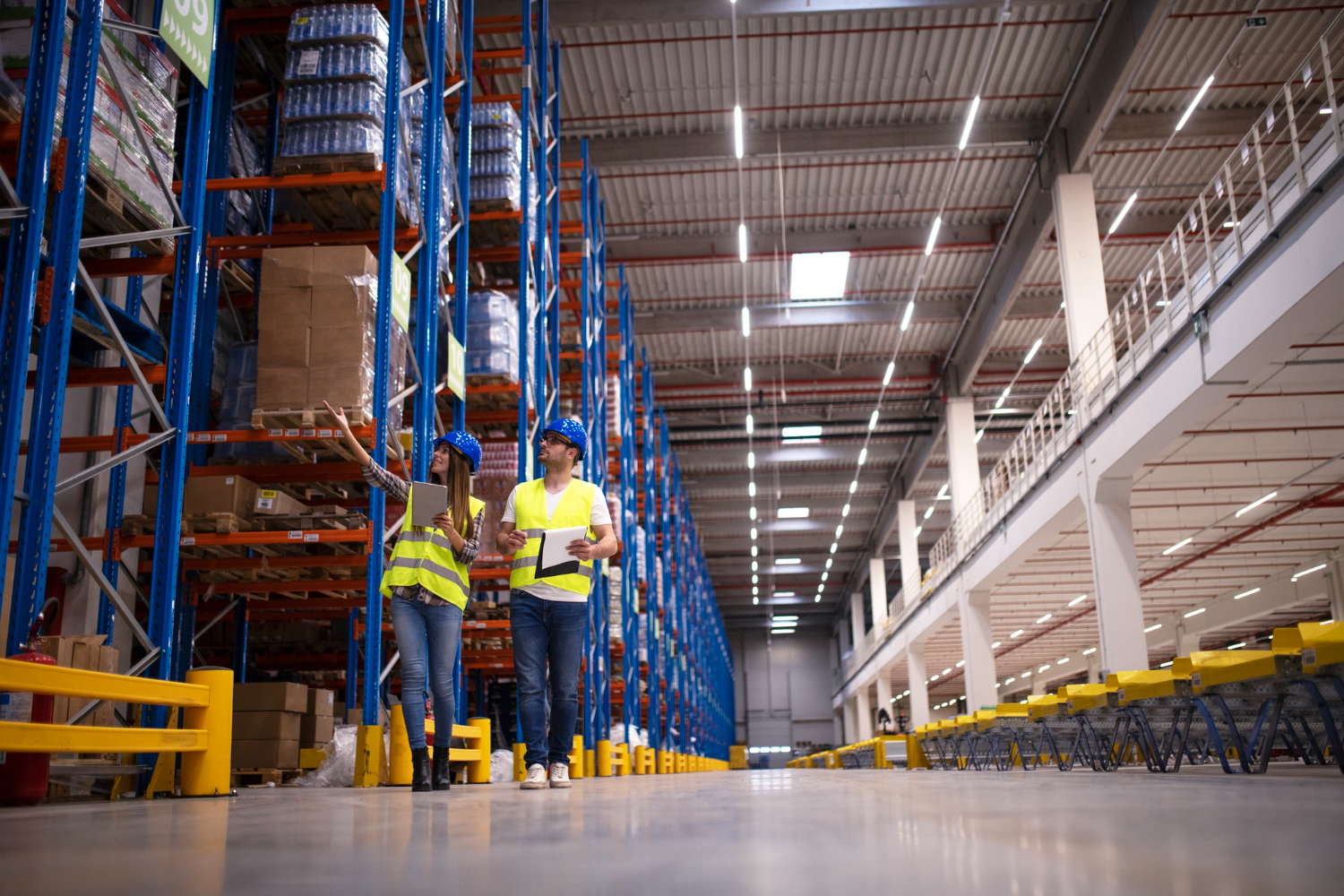
Warehouses and distribution centers are the bustling hubs at the heart of the logistics industry. Typically, what’s transported out of these facilities is viewed with greater importance than the conditions inside the facilities themselves. After all, unlike hospitals, schools or retail spaces, most consumers will never step foot inside one of these facilities. That said, these sizable buildings still need to be cleaned regularly and well maintained to ensure the safety of their workers, efficient operations, and adherence to ISO standards.
Traditional Limitations
The sheer scale of many warehouses and distribution centers, coupled with their frequent 24/7 operation, has made traditional floor cleaning methods a less-than-efficient proposition for this segment. Manual and even machine-aided floor cleaning takes a lot of time, and it can be difficult to fit this in when a facility is running around the clock. Then there’s the fact that many of these facilities accumulate large amounts of dust and debris due to the type of products stored, the activities of on-site or adjacent manufacturing operations, open bay doors, or all of the above. This continual build up of dust makes floor cleaning all the more challenging and time consuming since even the best walk-behind floor scrubbers need a dust-free surface to work well.
Is there an answer? Yes—and it comes from the world of robotics.
Autonomous Solutions
Robotic floor cleaning technology has come leaps and bounds since it was introduced at commercial scale over a decade ago. Where previously floor cleaning robots consisted of ride-on and walk-behind scrubbers that had been retrofitted to perform certain tasks autonomously, today’s next-generation units are an entirely different beast. The technology has been refined to such an extent that floor cleaning robots now represent an undeniable value to commercial and industrial facilities across the spectrum.
Few facilities are as well-suited to this new generation of large-scale autonomous floor cleaning robots as warehouses and distribution centers. With vast amounts of floor space in need of unobtrusive, methodical cleaning that can be carried out any time of day, warehouses and distribution centers are an ideal setting for these robots to prove their mettle.
Let’s take a look at why the autonomous solutions offered by Pringle Robotics are uniquely matched to the task.
Dust-Busting Big Boys
The CC3 is a 20-inch industrial-grade autonomous floor scrubbing robot ideal for hard flooring surfaces such as concrete, epoxy, tile and stone. The CC5 is a larger 32-inch autonomous floor scrubbing robot purpose-built for very large facilities. But don’t let the “scrubbing” part of these descriptions fool you—unlike traditional floor scrubbers, the CC3 and CC5 do something revolutionary: they simultaneously sweep/vacuum AND scrub. As discussed earlier, the dusty environment of many warehouses and distribution centers can pose a challenge when it comes to traditional floor cleaning methods, requiring two separate cleaning cycles—one to remove the dust, and one to actually scrub the floors. With the CC3 and CC5, both of these tasks are completed during one highly efficient cleaning run.
Here’s how it works: the units have two counter rotating brushes which pick up debris and push the large pieces into a hopper. At the same time, a controlled release of water drips onto the top of the rotating brushes, which allows the brushes to scrub the floors. The water also mixes with dust and small particles, and is picked up by a squeegee and connected vacuum. This dual functionality allows facilities to significantly reduce, or even fully eliminate, the need to pre-sweep floors before scrubbing, as is the case with traditional cleaning methods.
Small But Mighty
The smallest robot in the Pringle Robotics’ floor cleaning lineup is also its most versatile. The CC1 is a 4-in-1 unit that sweeps, vacuums, mops, and scrubs, and can be used on both hard floors and commercial carpet. Its relatively small size and nimble maneuvering make it ideal for a wide range of spaces, including those furnished with potential obstacles such as tables, work benches, office cubicles, or general equipment. It’s also highly efficient in larger spaces, covering 6,00-8,000 square feet per hour. Warehouses and distribution centers that need to clean a variety of spaces efficiently can benefit immensely from CC1’s “do it all” functionality.
Brawn Without the Bulk
Unlike the large, bulky retrofitted ride-on scrubbers often marketed as autonomous floor cleaning robots, the next-generation CC1, CC3 and CC5 have been designed to minimize both the space they take up and the disruption they might cause during operation. All three units are natively built with the latest AMR operating systems, enabling smoother operation, better cleaning in tight spaces and along edges, plus smaller size and higher efficiency than other robots on the market.
But don’t let their smaller, sleeker design fool you—these robots sacrifice nothing when it comes to cleaning power. From 8,000 square feet per hour for the compact CC1, to 15,000 square feet per hour for the mid-size CC3, to a whopping 40,000 square feet per hour for the heavy-duty CC5, this fleet can tackle floor cleaning challenges of any scale.
Truly Autonomous
The CC1, CC3 and CC5 are fully autonomous, meaning that they do not need human assistance to operate or carry out tasks. Thanks to an advanced Robot Operating System (ROS) and additional software integrations, they can “wake” themselves up, go to an assigned cleaning location, perform cleaning tasks and return “home” or to a new location—all based on predetermined workflows. They can also be activated and sent to perform tasks on an ad-hoc basis, as needs arise. These autonomous robots are also able to self monitor and maintain homeostasis, returning to their self-charging docks as needed. And unlike their less advanced counterparts, they also automatically empty themselves of waste water and refuse, and refill with clean water/cleaning solution, keeping human involvement to a minimum.
Additional Benefits
The obvious benefit of autonomous floor cleaning robots within a warehouse or distribution center is consistently clean floors. But what about the less obvious rewards?
Minimizing Disruption
As mentioned earlier, one reason that it’s so difficult for these facilities to maintain clean and dust-free floors is the fact that there is little-to-no downtime in their operations, making scheduled manual cleaning hard to fit in. But because autonomous floor cleaning robots are so much more efficient than human cleaners while also being compact in size, skilled at avoiding obstacles, and designed to self-maintain, they can consistently get the job done without getting in the way. This minimization of disruption enhances overall efficiency and allows warehouses and distribution centers to maintain cleanliness without sacrificing productivity.
Integrating with Smart Facility Management Systems
As facilities of all sizes embrace IoT-enabled facility management systems, autonomous floor cleaning robots find themselves even more at home. Autonomous robots easily integrate with these systems, providing real-time monitoring, scheduling, and reporting capabilities. Facility managers can remotely monitor cleaning activities, adjust cleaning schedules, and access performance metrics through centralized control interfaces like Pringle NOC. This integration enables proactive maintenance, data-driven decision-making, and more effective resource allocation.
Complying with Standards
Autonomous floor cleaning robots connected to a facility management system can also play a key role in upholding regulatory compliance by offering traceable cleaning records and customizable cleaning SOPs. With the ability to program cleaning schedules and protocols according to industry-specific requirements, these robots provide documented assurance that cleaning activities are in-step with regulatory standards. By automating compliance-related cleaning tasks, warehouses can reduce their regulatory risks and enhance environmental and occupational safety.
Convenience and Consistency are Key
While traditional cleaning methods have posed something of a conundrum for the “always on” environment of warehouses and distribution centers, the convenience, consistency and unobtrusiveness of today’s high-tech autonomous floor cleaning robots offer a viable way for these important facilities to maintain safe, debris-free floors. With facilities across all industries realizing the value of automated cleaning, today there’s nothing standing in the way of clean floors—no matter how big the space.
Interested in learning more about automated solutions for warehouse and distribution center floor cleaning? Get in touch with our experts today!
Leave a comment below...