Blog
AMRs for Industrial Facilities
Back to Blog(s)
July 8 2025
July 8 2025
Floor Cleaning and Internal Transport are Standout Benefits
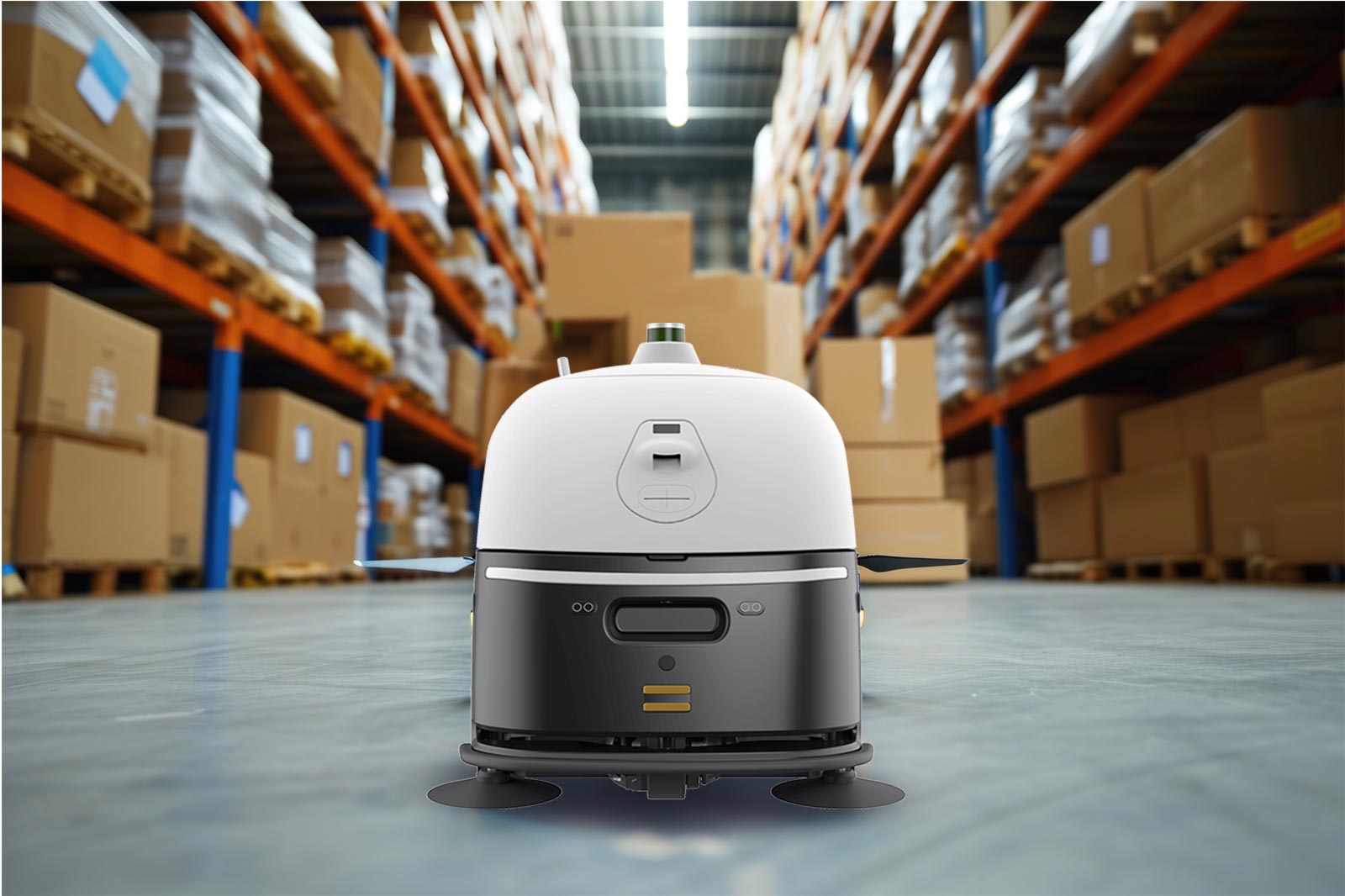
While robotics in manufacturing is nothing new, Autonomous Mobile Robots (AMRs) are quickly becoming essential players on the factory floor. From maintaining cleanliness in large warehouses to transporting materials across vast facilities, AMRs are changing how businesses think about operational efficiency.
What Are AMRs?
AMRs are self-navigating machines equipped with advanced sensors, cameras, and AI-driven software that enable them to understand and move through dynamic environments without human intervention.
Unlike traditional Automated Guided Vehicles (AGVs), which require fixed paths or physical guides like magnetic strips, AMRs use real-time mapping and decision-making to navigate complex layouts and avoid obstacles. This flexibility makes AMRs especially valuable in industrial facilities where layout changes, human traffic, and variable tasks are common.
In this post, we’ll be looking at two types of AMRs that are proving highly useful for industrial facilities—autonomous floor cleaning robots and intra-facility delivery/transport robots.
Why AMRs Matter in Industrial Environments
- Industrial environments such as warehouses, distribution centers, and manufacturing plants are large, fast-paced, and safety-critical. These settings require:
- High uptime and productivity
- Consistent cleanliness to meet safety and regulatory standards
- Safe transport of materials with minimal human error
Traditionally, these tasks have relied on manual labor or semi-automated solutions like forklifts and ride-on scrubbers. However, these approaches are limited by human availability, fatigue, and variability in performance.
The Case for Autonomous Floor Cleaning
Clean floors in industrial facilities aren’t necessarily about appearances; they’re integral to workplace safety, equipment longevity, and regulatory compliance. Slips, trips, and falls remain a leading cause of workplace injuries, with the U.S. Bureau of Labor Statistics attributing a significant percentage of nonfatal injuries in manufacturing to these hazards.
Unfortunately, the sheer scale of many warehouses and distribution centers, combined with round-the-clock operations, means traditional cleaning methods simply aren’t as efficient or practical as they might be for smaller facilities.
Dust is also a known scourge within industrial facilities, where it can contribute to product contamination, worker respiratory issues, fall risks, and machinery malfunction. This constant build up of dust makes traditional floor cleaning all the more challenging since even high-quality walk-behind floor scrubbers work best on dust-free surfaces.
Autonomous floor cleaning robots offer several compelling benefits:
Consistent Performance
AMR floor cleaners provide a standardized level of cleanliness every time. Unlike manual cleaning, which may vary depending on operator skill or fatigue (not to mention having someone available to run a machine!), robotic cleaners follow pre-defined paths with high precision, ensuring consistent coverage as often and as long as needed. They also tackle the aforementioned dust issue with high efficacy—models like the CC3, CC5 and TN70 simultaneously sweep and scrub during each highly efficient cleaning run, eliminating the traditional need for two separate cleaning cycles.
Labor Reallocation
These robots do not replace jobs—they augment them. By taking over repetitive, physically demanding cleaning tasks, AMRs allow facility workers to focus on higher-value duties, such as maintenance, supervision, and operations improvement. According to a report from ABI Research, the use of cleaning robots can improve labor productivity by up to 30% in certain environments.
Operational Transparency
Modern autonomous floor cleaners come equipped with IoT capabilities, enabling managers to track cleaning routes, run times, performance metrics, and robot health status in real time. This data-driven approach enables assurance of work, optimized facility management, and more accurate predictive maintenance.
24/7 Operation
With programmable schedules and minimal downtime, floor-cleaning AMRs can operate during off-hours or between shifts, ensuring cleanliness without disrupting productivity.
AMRs for Internal Transport and Delivery
If automated floor cleaning is still poised for its big breakthrough within the industrial facility space, AMRs for materials transport have already been widely adopted. Whether they’re transporting components to an assembly line or delivering finished goods to a storage area, AMRs enhance internal logistics with precision and reliability.
Two models offered by Pringle Robotics are the T300 and the FlashBoT.
The T300 is a versatile material transport and heavy-load delivery robot for industrial and commercial settings. With VSLAM+ for rapid deployment across vast spaces, the T300 rapidly adapts to new layouts and configurations—important for the dynamic environments of industrial facilities. It also easily integrates with elevators and automatic gates, increasing its potential for utilization. 360° Omni-Sense Safety meets stringent ISO 3691-4 guidelines for industrial vehicles, and motion control, adaptive suspension and shock absorbing technology unite for ultimate stability during transportation. The robot is also very versatile, operating in four distinct modes to fulfill a variety of needs—auto delivery mode; follow mode, power assist mode, and lift mode.
The FlashBoT is ideal for industrial facilities that need smaller quantities of sensitive material transported securely. This secured autonomous courier integrates smoothly with elevators and automatic gates, transporting materials to designated locations within passcode-protected interior compartments. Optional UV-C disinfection technology allows for sterilization of instruments or tools during transport.
In general, internal transport/delivery AMRs provide significant benefits to industrial facilities:
Increased Efficiency
AMRs can navigate dynamic environments and optimize routes in real time, reducing the time and energy required for internal transport. A study by DHL reports that AMRs can reduce internal transport costs by up to 50% compared to manual methods. As for the workforce, AMRs are best viewed as collaborative tools rather than replacements. They take over repetitive, physically taxing tasks, freeing up workers for roles that require human creativity, decision-making, and oversight.
Scalability and Flexibility
Unlike conveyor systems or fixed AGVs, AMRs can be quickly reprogrammed and redeployed to accommodate new workflows, facility expansions, or layout changes. This agility is especially valuable in industries with fluctuating demand or seasonal peaks.
Safety Enhancement
Equipped with sensors, LiDAR, and collision avoidance systems, AMRs can operate safely alongside human workers. They reduce the risk of injuries associated with forklifts or manual carts and comply with industry safety standards.
Integration with Existing Systems
Modern AMRs are not isolated tools—they’re part of a broader ecosystem. Many come with cloud connectivity and APIs, allowing them to integrate with WMS (Warehouse Management Systems), ERP systems, and building automation software. This connectivity enables data collection on cleaning performance, delivery times, robot utilization, and predictive maintenance.
Companies gain valuable insights into operations, enabling them to optimize routes, track ROI, and make data-driven decisions. The use of machine learning algorithms also means that some AMRs can get “smarter” over time, learning to navigate more efficiently or adjust to seasonal production spikes.
A Strategic Investment in the Future
The deployment of industrial AMRs for cleaning and transport is rapidly becoming an essential component of efficient facility management. As pressure mounts to do more with less, maintain compliance, and create safer work environments, AMRs offer a proven, scalable path forward.
In short, they clean, they carry, they adapt—and they’re here to stay.
If you’re interested in learning more about our AMRs solutions for industrial facilities, get in touch today!
Leave a comment below...