Blog
Beyond the Standalone Unit
Back to Blog(s)
September 24 2025
September 24 2025
Autonomous Floor Cleaning Robot Deployment at Scale
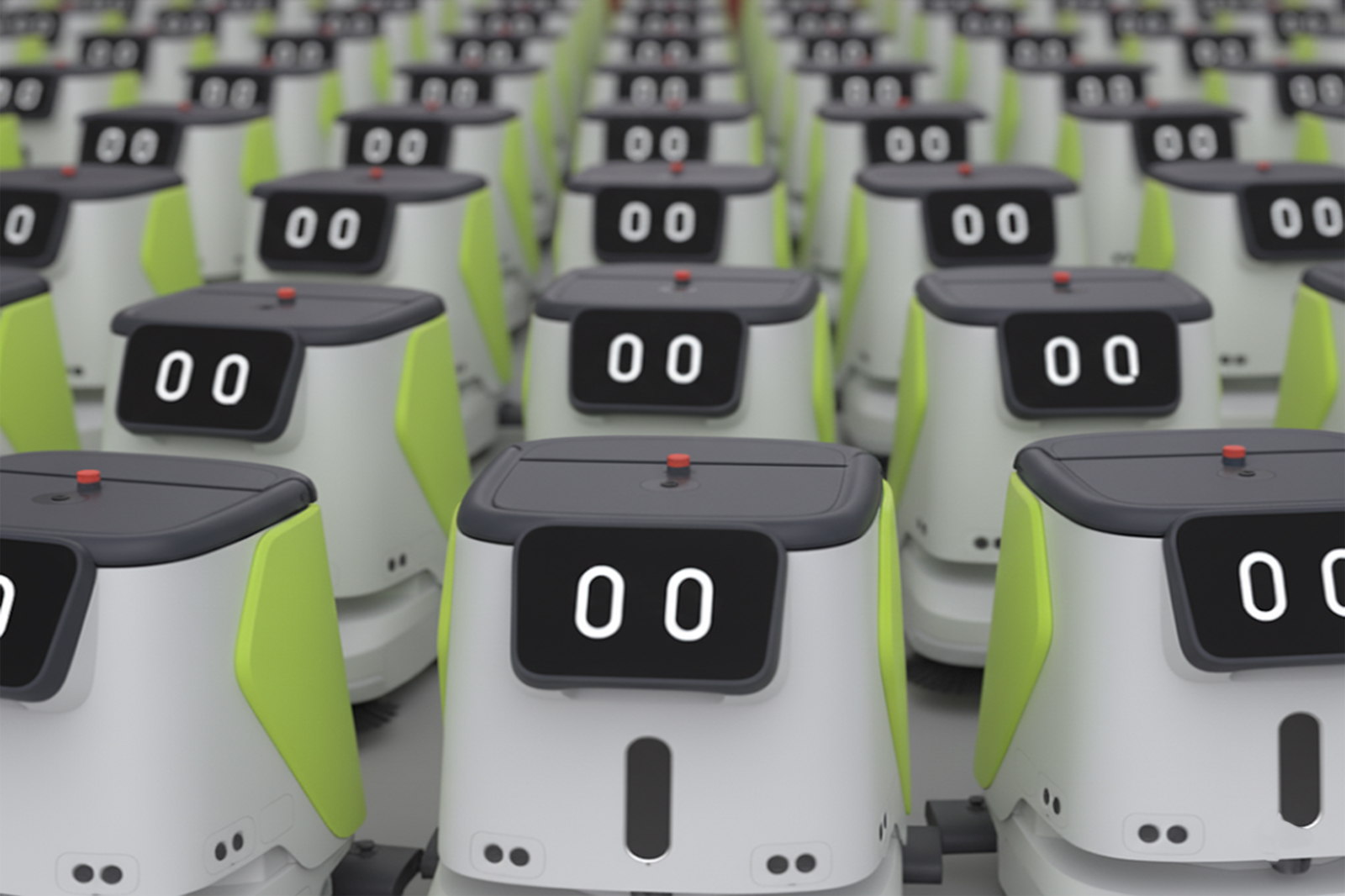
Autonomous floor cleaning robots are rapidly proving their value in facilities of every type, from hospitals to retail stores to distribution centers. For many organizations, the journey begins with a single unit deployed in one location. This “pilot robot” demonstrates proof of concept, showcases the technology’s capabilities, and begins to deliver measurable returns.
That said, for larger facilities and companies with multiple locations, the true potential of robotic cleaning isn’t fully unlocked at the individual unit level. The real power of this technology emerges when robots are deployed at scale—not as isolated gadgets, but as an integral part of optimized operations.
Scaling a robotic fleet amplifies efficiency, strengthens consistency, and transforms cleaning into a measurable enterprise-level advantage—especially when backed by intelligent software platforms like Pringle NOC and Pringle Pristine.
From Proof of Concept to Full-Scale Operations
Most organizations start small with robotics (though this is quickly changing as their overall value becomes proven). A single-unit deployment allows teams to test how well the robot fits into existing workflows, monitor its cleaning performance, and gauge staff reactions. This step is valuable, but limiting deployments to one robot caps the opportunity.
A single robot can only do so much. When cleaning automation is scaled across a facility, or better yet, across multiple facilities, the benefits compound:
- More square footage covered each day with no added labor strain.
- Greater consistency across locations.
- Fleet-level data that helps stakeholders make smarter, evidence-based decisions about cleaning operations.
But keep in mind that scaling isn’t just about adding more robots. It’s about making robots an integrated part of the organization’s operational backbone.
The Infrastructure That Makes Scaling Possible
The key to a successful fleet deployment or deployment across multiple sites is two-fold: a systematic approach with comprehensive training and support from your robotics vendor; and intelligent software systems that bring it all together.
Comprehensive Planning and Support
Without the right planning, training, monitoring, and ongoing support, expensive robotic equipment can easily languish in a storage closet if on-site staff are intimidated by the technology, or the machines aren’t properly maintained. To ensure the success of a large-scale deployment, a robotics solutions provider must collaborate with and support the client every step of the way. At Pringle Robotics, we provide exceptional training and support to ensure seamless implementation and maintenance. At a high level, this includes:
- Developing detailed SOPs for each deployment site, and across the organization
- In-person training of on-site personnel in terms of robot operation and maintenance, and development of detailed training materials
- Where appropriate, developing training materials for third-party or corporate-contracted field service technicians, enabling them to maintain and repair the robots under most circumstances
Robust Facility Management System
A Facility Management System (FMS) is a unified software solution that allows facilities to manage their physical assets, spaces, cleaning/maintenance and workflows through one centralized hub. For robot fleets in particular, a good FMS ensures that a facility’s robots are not merely standalone assets, but actively monitored and managed components of a unified system. For instance, systems like Pringle NOC and Pringle Pristine within the Pringle FMS Ecosystem enable:
- Real-time tracking and control, so facility managers can monitor robot location, status, and performance data in real time, optimizing deployments and resource allocation
- Scheduling and task management, allowing managers to create and assign cleaning, delivery, and maintenance tasks efficiently, ensuring seamless operation and maximum productivity
- Data analytics and reporting, providing valuable insights into robot performance, cleaning effectiveness, and resource utilization, driving continuous improvement.
Integration of robots within existing building systems, such as elevators and access control, for unified facility management
Coordination and Multi-Robot Collaboration
Scaling across large spaces or multiple sites introduces coordination needs. Without it, coverage can overlap inefficiently or result in missed areas. An intelligent deployment strategy uses zoning, scheduling, and central control—ensuring each robot covers specific areas like concourses, lobbies, or busy corridors. Combined with the oversight delivered by an FMS like Pringle NOC, this ensures smart route division and efficient, simultaneous operation without interference.
Centralized Oversight Meets Local Autonomy
Scaled deployments shift oversight from a single custodian or bot operator overseeing a standalone unit, to a more centralized and systematic approach covering multiple units and/or locations. A variety of scenarios is possible depending on an organization’s structure, needs, and SOPs, but a general setup might look something like this:
- Local staff still handle day-to-day duties such as initiating cleaning runs, performing routine maintenance, and troubleshooting or liaising with support depending on level of responsibility.
- Meanwhile, centralized operations teams can take a more macro view, managing coordinated scheduling, troubleshooting issues, making decisions about fleet-level predictive maintenance, and interpreting data via an FMS like Pringle NOC.
This balance of local responsibility and centralized control allows systematic scaling and a clear chain of operation, eliminating the chaos that could result from each robot being managed independently.
Data at Scale: Turning Cleaning into a KPI
A single robot’s logs—runtime, square footage cleaned, routes taken—are useful. Across a fleet, these logs become enterprise-level insights:
- Benchmark cleanliness across facilities
- Identify high-traffic zones that need more frequent cleaning
- Spot performance variances and optimize route logic
- Use Pringle Pristine’s dynamic tasking to push real-time adjustments based on sensor or robot data
With these types of deep insights provided by the NOC, floor cleaning isn’t invisible; it’s measurable, comparable, and actionable.
ROI Amplified at Scale
Scaling enhances return on investment through:
- Lower cost per square foot cleaned, as more coverage is achieved efficiently
- Labor optimization, as staff labor can be redirected towards more complex and higher-value work when floor cleaning is automated
- Predictive and preventive maintenance, scheduled across a fleet for maximum uptime
- Reduced risk and asset preservation, thanks to consistent cleaning that protects floors and minimizes hazards
Scaling transforms cleaning from a necessary cost to a strategic, value-generating system.
Fleets are the Future
Autonomous floor cleaning robots may have already proven their value as standalone units, but the future lies in fleet-level deployment—where robots, sensors, and software platforms like Pringle NOC and Pringle Pristine form a seamlessly integrated facility maintenance ecosystem.
By moving beyond single robots and scaling across facilities, organizations can unlock greater efficiency, consistency, and insight than ever before.
Interested in leveling up your facility’s cleaning operations? Get in touch with our experts today!
Leave a comment below...