Blog
The Always On Facility
Back to Blog(s)
October 8 2025
October 8 2025
How Autonomous Robots Keep Up With 24/7 Operations
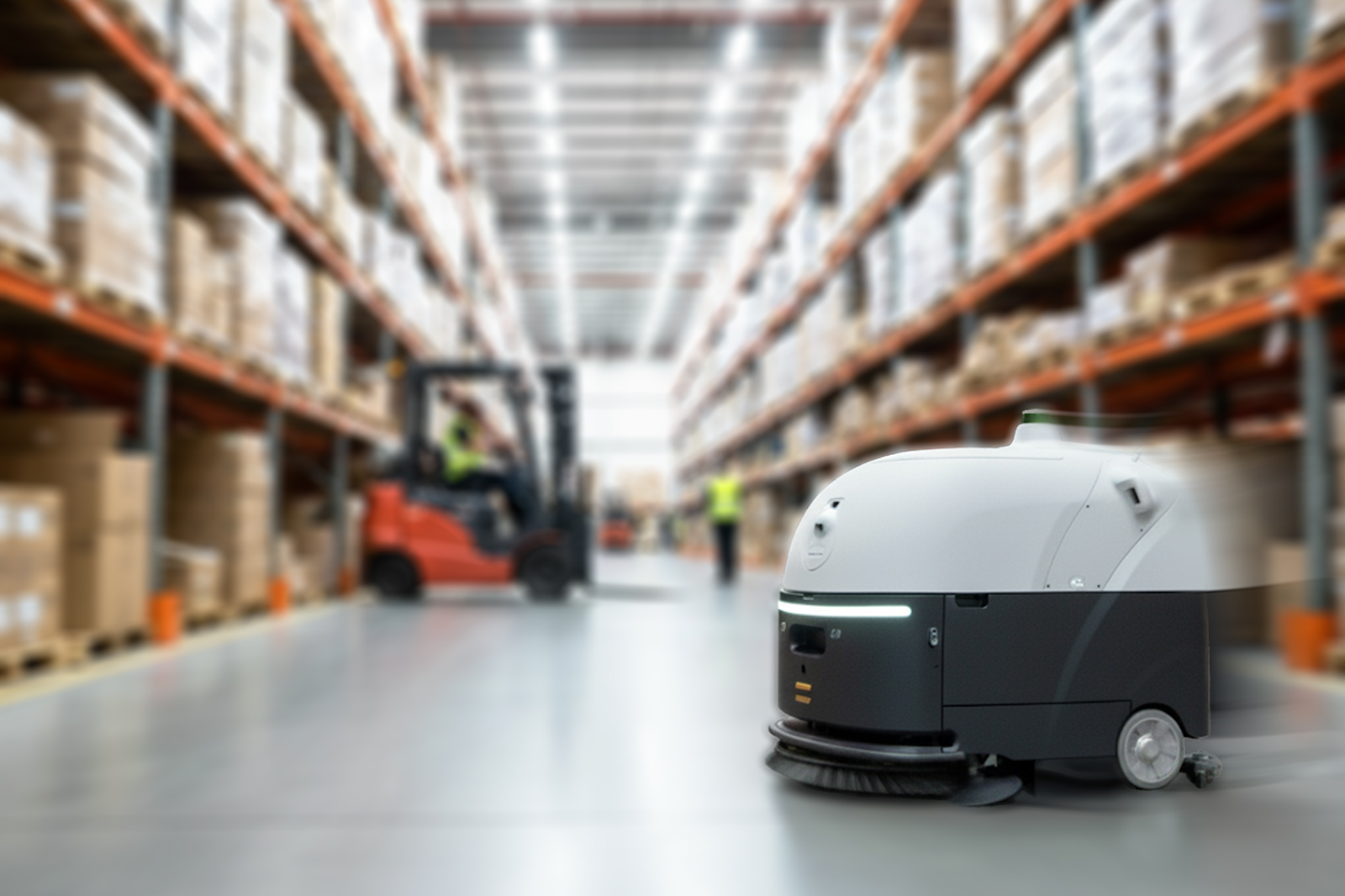
Some facilities never sleep. Hospitals, warehouses, airports, and distribution centers run around the clock. And when operations don’t stop, neither does the demand for cleanliness. Floors get dirty, spills happen, and safety hazards pop up at all hours.
Traditionally, custodial teams in these environments faced an uphill battle—limited staff, tight budgets, and the pressure of constant demand. Autonomous floor cleaning robots are rewriting this script, making it possible to maintain spotless, safe floors without slowing down operations.
The Work of 24/7 Cleaning
Continuous operations place enormous stress on facilities teams. For instance, EVS staff in healthcare settings juggle multiple responsibilities, strict infection-control requirements, and heavy workloads around the clock. Custodial workers in warehouses and distribution centers fight a constant tide of dust and debris, often in facilities operating at high speed where the work (and the mess) never stops.
In these types of “always on” facilities, the demand for constant cleaning with no “off” periods can lead to custodial teams stretched thin, cleaning deferred or not up to standard, and safety risks that multiply.
How Robots Change the Equation
Autonomous floor cleaning robots offer solutions tailored to the always-on facility:
- Continuous coverage: Robots can clean during day, night, or shift transitions without downtime.
- Minimal disruption: Quiet operation and precise navigation allow cleaning to happen alongside active operations.
- Reliability: Robots don’t tire or lose consistency, even when tasked with covering large square footage repeatedly.
This means 24/7 facilities can finally match their nonstop operations with nonstop cleanliness.
Healthcare: Safety and Infection Control
In hospitals and clinics, cleanliness is directly tied to patient outcomes, and core EVS resources are ideally focused on cleaning and sanitizing patient areas. But floor cleaning must also be completed in high-traffic areas such as hallways and lobbies on a near-constant basis, creating competition for EVS staff time. Most hospitals currently use some combination of commercial vacuum cleaners, riding and walk-behind scrubbers, and manual mopping/spot cleaning for floor maintenance. What these techniques all have in common is the human time and labor required to operate the equipment and accomplish the task in a 24/7 environment.
Robotic floor cleaners, by contrast, can operate independently of human time and effort. When utilized within a fleet structure, there will always be a BoT at the ready, allowing human EVS staff to recoup enormous amounts of time previously spent cleaning floors, and redirecting those hours towards deep cleaning of patient areas, rigorous disinfection practices, and other pressing maintenance concerns. Fully autonomous floor cleaning robots, like the CC1 and CC3 come with the added benefit of self-maintenance—they are able to self-charge, empty their tanks of dirty water and refill with clean water, making them virtually hands-free.
Warehouses and Distribution Centers: Keeping Logistics Moving
For logistics facilities, uptime is everything. Unfortunately, the sheer scale of many warehouses and distribution centers (combined with round-the-clock operations) makes traditional floor cleaning methods less efficient and less practical than they might be for smaller facilities.
Manual and even machine-aided floor cleaning takes a lot of time, and it can be difficult to fit this in when a facility is running around the clock. Then there’s the fact that these facilities tend to accumulate large amounts of dust and debris due to the nature of their operations. This constant build up of dust makes floor cleaning all the more challenging and time consuming since even high-quality walk-behind floor scrubbers work best on dust-free surfaces.
Dust, spills, and debris aren’t just cleanliness issues—they’re productivity and safety risks. A slippery surface in a warehouse aisle can delay operations, damage goods, or worse, cause injury.
Autonomous floor cleaning robots help solve these challenges:
- Large-scale coverage: Robots can patrol warehouse floors continuously, ensuring aisles and loading docks stay clear of hazards without depending on large human cleaning crews.
- Scheduling flexibility: Facilities can program robots to clean during shift changes, overnight restocking, or even while operations continue, minimizing disruptions to productivity.
- Improved safety outcomes: By reducing dust buildup and handling spills quickly, robots directly reduce the risk of slips, trips, and equipment accidents.
- Operational efficiency: With robots handling repetitive floor cleaning, custodial teams can focus on tasks like spill response, inventory support, or equipment sanitization—activities that add more direct value to operations.
- Predictable performance: Because robots create detailed cleaning logs, managers gain visibility into what’s being done and when, providing confidence that safety standards are being met across every shift.
And back to the topic of dust. Autonomous floor scrubbers like Pringle Robotics’ CC3 (20-inch scrubber) and CC5 (32-inch scrubber) are ideal for keeping warehouse floors dust-free. That’s because, unlike traditional floor scrubbers, these robots do something revolutionary—they simultaneously sweep/vacuum AND scrub, eliminating the need for a two-step floor cleaning process.
Facilities that need sweeping only will see big benefits from the MT1 and MT1Vac, AI-powered autonomous sweepers designed for large-scale commercial and industrial environments. These low-profile dust-busting units detect, recognize, and sweep all types of debris through AI deep learning and database updates. Their small size and nimble maneuvering allow for effective cleaning beneath conveyor belts and other raised structures within warehouses and distribution centers—something most robotic scrubbers are simply too tall to do. They’re fast too, sweeping up to 20,000 square feet per hour at normal operating speed.
In environments where seconds matter and downtime is costly, robots don’t just clean floors—they support output, worker safety, and the overall performance of the supply chain.
Actionable Data and Essential Oversight
Another revolutionary benefit to robotic cleaning technology for “always-on” facilities is the enablement of data collection and transparency. Unlike manual machines, autonomous cleaning robots record precise cleaning data that can be easily viewed and synthesized to optimize workflows and provide assurance of task completion.
This type of objective cleaning data becomes a game-changer when integrated into a comprehensive FMS (facility management system). For instance, systems like Pringle NOC and Pringle Pristine within the Pringle FMS Ecosystem enable:
- Real-time tracking and control, so facility managers can monitor robot location, status, and performance data in real time, optimizing deployments and resource allocation.
- Scheduling and task management, allowing managers to create and assign cleaning, delivery, and maintenance tasks efficiently, ensuring seamless operation and maximum productivity.
- Data analytics and reporting, providing valuable insights into robot performance, cleaning effectiveness, and resource utilization, driving continuous improvement.
- Integration of robots within existing building systems, such as elevators and access control, for unified facility management.
Together, these platforms keep cleaning operations running as smoothly as the rest of the 24/7 enterprise.
More than a Convenience
Hospitals, warehouses, airports, and other 24/7 facilities can’t afford to compromise on cleanliness, but traditional methods alone struggle to keep up with today’s demands. Autonomous floor cleaning robots offer a new way forward: safe, reliable, and truly continuous cleaning. In industries where uptime, safety, and trust are non-negotiable, robots are poised to become not just a convenience, but a necessity.
Interested in learning more about how our autonomous solutions are transforming facilities with ‘round-the-clock operations? Get in touch with our experts today!
Leave a comment below...