Blog
Robotics Trends to Watch in 2026
Back to Blog(s)
January 7 2026
January 7 2026
Automation Becomes Key to Efficient Facilities Management
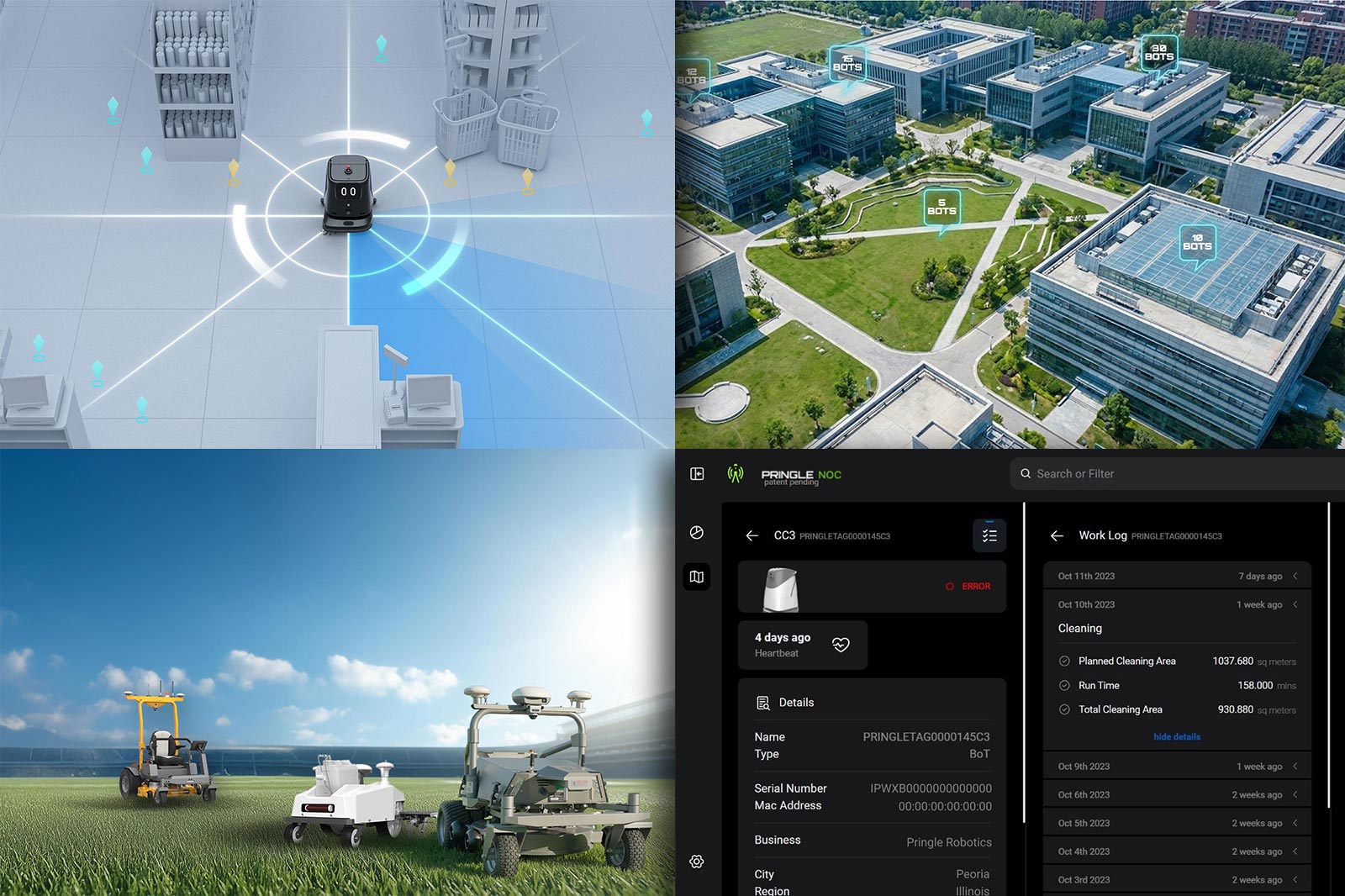
As we enter 2026, facility leaders across industries look out on a landscape that poses both familiar challenges and exciting opportunities. While they’re faced with the ongoing pressures of labor shortages compounded by rising cleanliness and safety expectations, they are also offered true solutions to these and other concerns through robotics and automation. As robotics has evolved from a novelty into a core component of modern facility operations, organizations like retail, hospitals, universities, stadiums, distribution centers, and corporate campuses are all integrating robots into daily workflows—not as replacements for staff, but as force multipliers.
There’s no longer any question whether robotics has a place in the facilities management landscape. What we’re watching now is how far the technology can go, and how quickly organizations can scale it.
Let’s look at some key trends that we see impacting facilities management automation in 2026.
AI-Driven Navigation Becomes Key
A few years ago, autonomous cleaning robots depended on predictable environments and rigid mapping approaches to do their work. They often struggled with layout changes, unexpected obstacles, or crowded public spaces. Now, these limitations are fading fast thanks to significant advances in AI-driven navigation.
The latest cleaning robots combine AI vision systems, advanced sensor fusion, and environmental learning to move more naturally and safely through dynamic facilities. Rather than simply following predefined routes, robots can now interpret their surroundings, adapt to ongoing activity, and make independent navigational decisions. This enables them to learn their way around a facility and handle environments with heavy foot traffic or changing layouts without needing to be re-mapped. AI navigation enables a new level of autonomy in which robotic cleaning becomes not just reliable, but remarkably flexible.
Fleet Management Platforms Become Mission Control
As more organizations transition from testing out one or two cleaning robots to deploying larger numbers across multiple sites, centralized robot management has become essential. Fleet management platforms like Pringle NOC serve as the “mission control” of modern facility operations.
FMS systems like NOC give organizations unprecedented oversight of both robots and other connected assets, whether they are operating in one building or dozens scattered across a regional campus. Through Pringle NOC, facility teams can monitor robot performance in real time, review cleaning coverage metrics, identify efficiency trends, and troubleshoot issues remotely. Importantly, organizations with large fleets can also tap into the NOC to automate software updates for their robot units, using NOC to initiate these updates during periods of robot inactivity/charging.
The platform also offers predictive maintenance insights—alerting teams to potential mechanical or software issues before they cause downtime. Combined with regular maintenance and equipment inspections, this dual oversight empowers facilities to scale their robotics programs confidently, knowing they can maintain uptime and performance even as fleets grow larger and more diverse.
Robot-Facility Systems Integration Becomes Stronger
Another transformative development ramping up in 2026 is further integration between smart building systems and autonomous robots. Where robots once functioned in isolation, they can now communicate directly with connected infrastructure such as elevators, automatic doors, after-hours access controls, and occupancy sensors.
This integration allows robots to operate more efficiently across large facilities, traveling between floors, working around scheduled events, and responding intelligently to occupancy changes. A robot might wait to clean a corridor until sensors indicate that foot traffic has lightened, or request that a door unlock to transition into a restricted area during a late-night shift. Meanwhile, integration with digital work order systems allows dispatch and cleaning priorities to update automatically in response to real-time facility conditions. As a result, the entire ecosystem becomes more synchronized, efficient, and data-driven.
Robotics Addresses the Persistent Labor Gap
Nearly 6 years post-pandemic, the labor shortage in custodial, groundskeeping, and facility operations has become a long-term structural issue rather than a temporary challenge. With fewer reliable workers available, robots are becoming a critical resource for not merely maintaining expected service levels, but exceeding them.
As repetitive cleaning and maintenance tasks like floor cleaning and outdoor mowing can increasingly be delegated to autonomous robots, human workers are able to do more with their hours each day. This allows facilities to maintain high performance even when short-staffed. Instead of replacing workers, robots are stabilizing capacity and enabling smaller teams to maintain larger and more complex environments.
Multi-Robot Deployments Become the Rule Rather than Exception
As the technology behind autonomous robots continues to advance (and prove itself in the real world year after year), facilities are increasingly implementing fleets of robots rather than isolated units. A hospital system might deploy dozens of cleaning and supply delivery robots across multiple locations to address custodial staff shortages. Universities may automate an entire campus with a mix of indoor cleaning and outdoor mowing solutions. Municipalities can transition to using multiple turf care robots to maintain parks and recreation areas at scale.
The efficiencies gained from multi-robot deployments far exceed those from single units. Large-scale robotic fleets reshape cleaning workflows, improve consistency, reduce operational costs, and give facilities unprecedented visibility into performance. With centralized platforms like Pringle NOC ensuring oversight, scaling has never been easier.
Robotics for Outdoor Maintenance Gains Momentum
For decades, maintaining large expanses of turf—athletic fields, municipal parks, sprawling campuses, golf courses, and corporate grounds—has required significant labor, fuel, and equipment investment. Now, like indoor facilities maintenance, that model is shifting towards automation.
Commercial-grade robotic turf care solutions are entering the market with the promise of safer operations, lower long-term costs, greater precision, and a dramatic reduction in staff workload. And unlike early-generation robotic mowers, today’s professional units are powerful, intelligent, and built for complex commercial environments—not just residential lawns.
Advances in GNSS, LiDAR, and AI path planning allow autonomous mowers and athletic field line markers to operate with precision even in complex or GPS-compromised environments. As cities, universities, golf courses, and corporate campuses invest in these technologies, they reduce labor pressure, improve consistency, and shift away from the expense and environmental impact of gas-powered equipment.
Robots Are Becoming Essential Infrastructure
The steady uptick in robotics adoption is reshaping expectations across the facilities management field. As they continue proving their value by reliably performing the repetitive, time-consuming tasks that stood in the way of human productivity, robots are becoming essential infrastructure. Aided by advanced fleet oversight platforms like Pringle NOC, facility teams are embracing robotics as a strategic foundation for long-term operational resilience.
Organizations that invest and scale thoughtfully will gain a lasting advantage in cleanliness, efficiency, sustainability, and overall performance. Is 2026 the year that transformation starts for your facility?
Leave a comment below...