Blog
Why Automation Is No Longer Optional
Back to Blog(s)
March 10 2026
March 10 2026
Facilities Relying on Manual Cleaning Risk Falling Behind
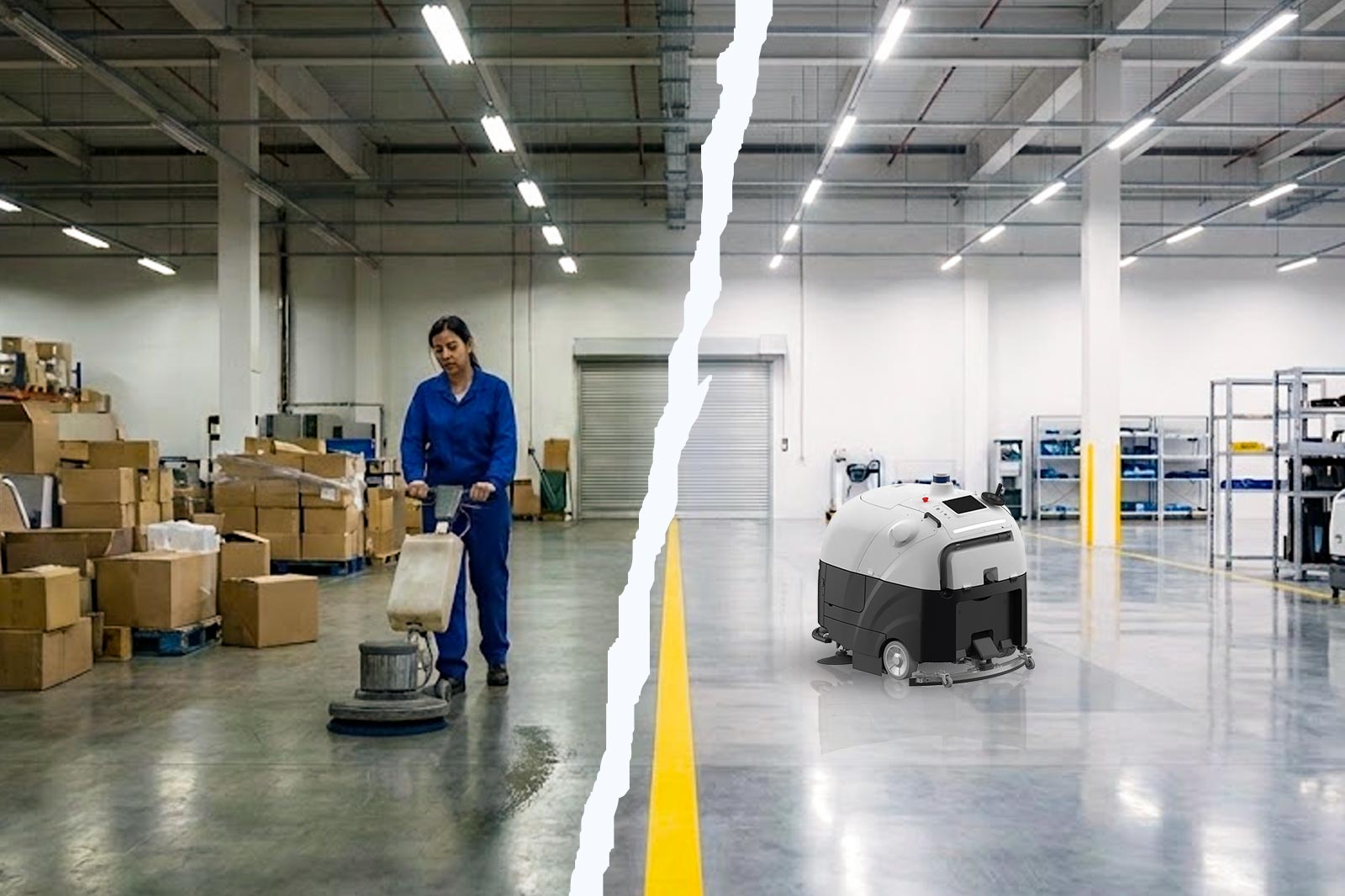
For years, automation in facilities management was viewed as a burgeoning novelty—something on the horizon to be watched, and possibly trialed by a daring few, but not truly practical or workable within the busy reality of daily operations. Today, that framing no longer fits. Cleaning automation has moved beyond the early adopter realm, and into the category of operational necessity.
Rising labor challenges, increased expectations around cleanliness and safety, and growing pressure to do more with less have fundamentally changed the way facility managers should think about cleaning technology. Facilities that remain on the fence about automation aren’t wisely watching and waiting (not anymore). Now, they’re simply falling behind.
The New Reality of Facility Operations
Facility leaders are navigating a more complex environment than ever before. Staffing shortages persist across industries, and when workers are available, retention is a constant challenge. At the same time, buildings are larger, busier, and under greater scrutiny from occupants, regulators, and a public that’s all too willing to air perceived missteps online.
Manual processes that once worked at smaller scales are now being stretched thin, resulting in a set of predictable problems: cleaning schedules become inconsistent, documentation is incomplete, and teams are forced to operate reactively instead of proactively.
Automation addresses these challenges not by replacing people, but by stabilizing operations in an increasingly unstable environment.
Labor Constraints Have Changed the Landscape
The most immediate driver behind automation adoption is labor. Hiring and retaining custodial staff is more difficult, more expensive, and less predictable than it was even a few years ago.
Facilities that rely solely on manual labor face several risks:
- Coverage gaps when positions go unfilled
- Increased overtime and burnout
- Inconsistent cleaning results across shifts
- Greater exposure to injury (liability) and turnover
Automation helps facilities construct a dependable baseline. Autonomous robots handle repetitive, time-consuming tasks consistently, regardless of staffing fluctuations. This allows human teams to focus on work that requires judgment, flexibility, and attention to detail.
In this context, automation isn’t a means of eliminating jobs, but rather, supporting operations through reliability and making existing teams more effective.
Consistency Is Now a Requirement
Cleanliness expectations have evolved in a post-Covid world. In many environments—healthcare, retail, education, corporate spaces—inconsistent cleaning is simply not acceptable.
Manual cleaning depends heavily on individual performance. Fatigue, time pressure, and staffing gaps all contribute to variability. One shift may exceed expectations, while the next struggles to balance time-intensive floor cleaning tasks with other important responsibilities or last-minute requests.
In contrast, autonomous robots excel at consistency. They clean the same areas, to the same standard, on the same schedule, every time. This predictability helps facilities maintain a reliable baseline level of cleanliness, even during periods of disruption. And this consistency goes beyond providing operational benefits. It builds trust. Facility users sometimes notice when standards are reliably met, but almost always notice when they are not.
From Reactive to Proactive Operations
Traditional facility management has sometimes fallen into the trap of reacting to problems as they occur vs. acting to prevent them in the first place. Complaints drive action. Inspections uncover issues after the fact. Managers spend time responding instead of planning.
Automation changes this dynamic in a few key ways:
Immediate Data Generation
Robots automatically record cleaning coverage, run times, and frequency, giving managers a clear view of cleaning operations without relying on manual logs or subjective reporting. This visibility allows leaders to spot trends, identify gaps, and make informed adjustments before problems escalate.
Baseline Cleaning Happens Automatically
As discussed earlier, a facility running one or more floor cleaning robots on set schedules is already ahead of the game in a big way, allowing staff to be more flexible when it comes to addressing ah-hoc issues or focusing on deep cleaning/disinfection.
AI Is Creating Proactive Robots
The newest floor cleaning robots are now coming equipped with advanced vision and machine learning systems trained to identify hazards, detect spills and debris, or foreign objects in real time. More importantly, AI allows them to make decisions based on what they see.
If a wet hazard appears in a high-traffic area, the robot can tailor both its cleaning path and approach to achieve the best results, whether that means slowing down, increasing scrubbing pressure, or returning multiple times until the floor is restored. Over time, these AI-enabled systems will learn to recognize where issues occur most frequently—thresholds, hallways, cafeterias—and proactively increase attention in those areas.
Safety and Risk Can’t Be Afterthoughts
Safety has always mattered, but today it is inseparable from operational performance. Slips, falls, repetitive strain injuries, and chemical exposure all represent real risk—to people and to organizations.
By taking on physically demanding tasks, robots reduce strain on staff and help lower injury risk. Their precise and consistent operation minimizes variability that can lead to hazards, such as uneven cleaning or excess moisture on floors.
Automation also strengthens accountability. When cleaning is documented automatically, facilities are better positioned to demonstrate due diligence in the event of audits or incidents. In an environment where liability is under greater scrutiny, this documentation is a critical advantage.
Technology Expectations Are Rising Across Industries
Automation is becoming the norm in nearly every sector. From logistics to healthcare to retail, organizations are embracing technology to improve reliability and efficiency.
Facilities are not immune to this trend. Stakeholders increasingly expect modern tools to support operations. When cleaning and maintenance lag behind the rest of the organization technologically, it creates friction and inefficiency.
Automation aligns facilities management with broader digital transformation efforts, ensuring that physical spaces keep pace with organizational innovation.
Automation Enables a Strong Return on Labor
While traditional ROI remains important, automation also allows organizations to reimagine how labor is utilized. That’s because robots effect a strong Return on Labor, enabling facilities to get more value from the workforce they already have (without increasing headcount). Robots operate during off-hours, handle repetitive work, and free staff to focus on higher-impact responsibilities.
This shift in perspective can be powerful, especially in an environment where labor is both expensive and difficult to retain. Automation stretches limited resources further, without sacrificing quality.
The Cost of Waiting Is Increasing
An overlooked aspect of the automation curve is the cost of inaction. Facilities that eschew automation will continue to grapple with things like:
- Ongoing staffing instability
- Inconsistent cleaning standards and results performance
- Risk management vulnerabilities
- Limited visibility into facility management operations
Meanwhile, organizations that adopt automation gain experience, refine processes, and build internal expertise. Over time, this gap widens.
Autonomous cleaning technology brings consistency, resilience, safety, and visibility to environments that are under growing pressure. Robots support human teams, stabilize operations, and help facilities meet modern expectations.
If you’d like to learn more about the advantages your facility can gain through smart automation, get in touch with our experts!
Leave a comment below...