Blog
When Manual Cleaning Still Makes Sense
Back to Blog(s)
May 6 2026
May 6 2026
An Honest Look at Where Automation Fits—and Where It Doesn't
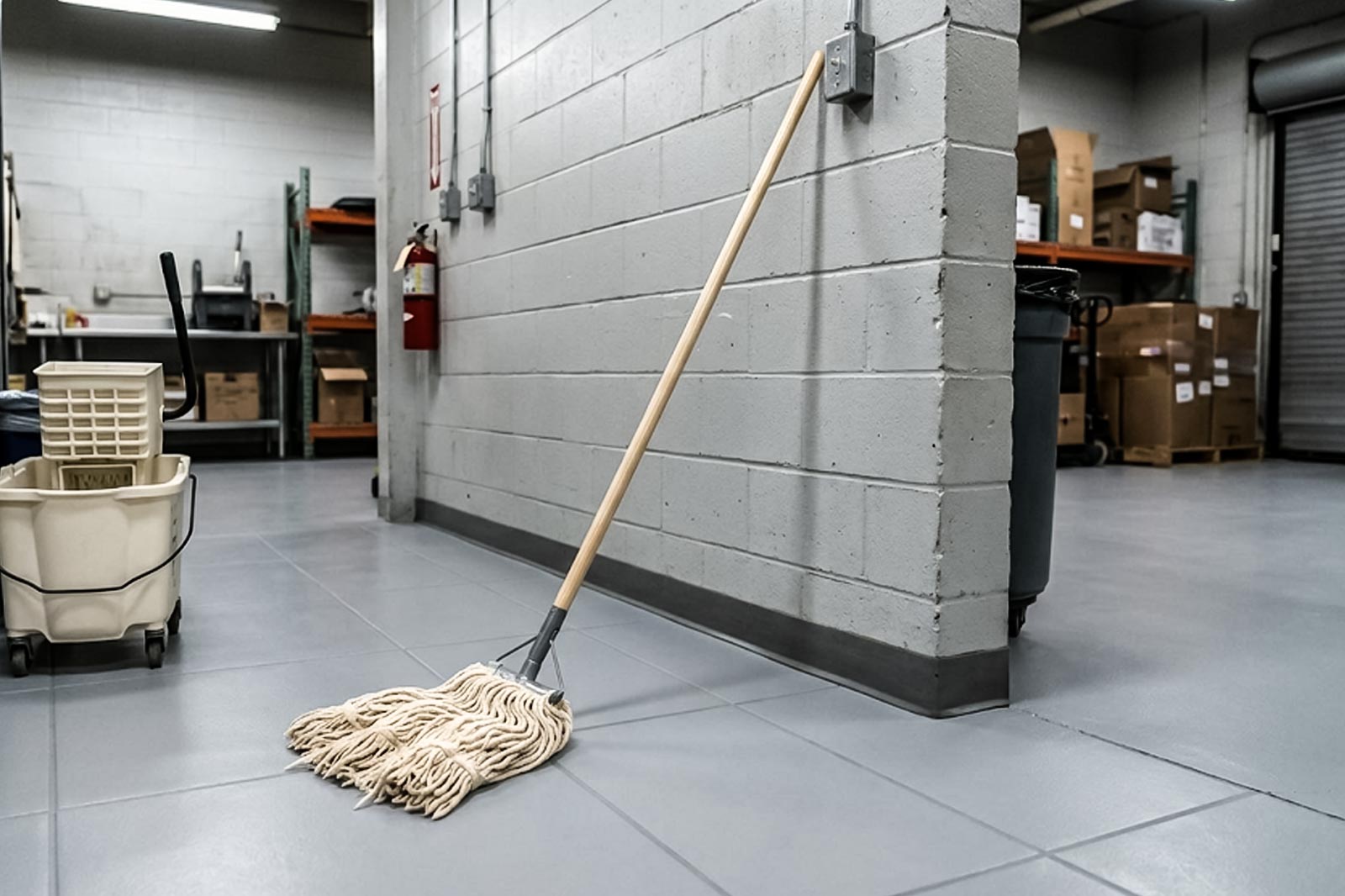
If you've spent any time reading about autonomous floor cleaning robots, you might get the impression that automation is the answer to every facility cleaning challenge. And while we're obviously big believers in this technology—it's what we do—the reality is more nuanced than that.
Not every facility needs a robot right now. Not every cleaning task can or should be automated. And not every square foot of flooring is a good candidate for autonomous cleaning.
The facilities that get the best results from automation are the ones that understand where it fits and where it doesn't. They use robots for what robots do best, and they preserve human effort for the tasks that genuinely require judgment, flexibility, and a human touch. That balance—knowing when to automate and when to stick with manual methods—is what separates a smart deployment from an experiment that ends up gathering dust in a storage closet.
When Manual Cleaning Still Makes Sense
There are scenarios where manual cleaning isn't just ok, but actually the better choice. Here are the most common ones.
Small Facilities with Limited Floor Space
If you're managing a 1,500-square-foot office, a small retail shop, or a compact clinic, the math on autonomous floor cleaning might not pencil out. The upfront cost of a robot, even a compact model, is hard to justify when a custodian or staff member can clean the entire space in 30 minutes with a vacuum and a mop.
Autonomous cleaning delivers the most value in facilities with extensive areas of flooring that take significant time to clean manually. Smaller-footprint facilities that see constant, heavy foot traffic (like convenience stores) can also make sense when the floors need to be cleaned near-continuously. But when the square footage is small and the cleaning task is quick, the ROI just isn't there. You're better off investing in quality manual equipment and focusing your resources elsewhere.
Highly Cluttered or Constantly Changing Layouts
Autonomous robots generally navigate using pre-programmed maps and advanced sensors—though this is quickly changing as newer AI-powered models get released. They're excellent at avoiding obstacles, but they're not designed to clean around constantly shifting clutter—think retail stockrooms where pallets and boxes are moved hourly, or facilities undergoing active construction with equipment and materials scattered across the floor.
In these environments, a human operator with a smart scrubber like the Pudu SH1 (or even a simple mop) can adapt on the fly, working around obstacles and adjusting to layout changes without needing to reprogram routes or pause for obstacle avoidance. Manual cleaning offers flexibility that automation can't match when the environment is in constant flux.
That said, once a construction project wraps up or a facility layout stabilizes, automation often becomes viable again. The key is recognizing when the environment is too dynamic for robots to operate efficiently.
Detailed Cleaning Around Complex Equipment
Autonomous robots excel in large, open floor areas or those with clear pathways. They're less effective in tight, equipment-dense spaces where cleaning requires maneuvering around pipes, machinery bases, or intricate layouts with lots of nooks and corners.
For example, cleaning around the base of a CNC machine, inside a crowded commercial kitchen, or beneath densely packed retail shelving often requires a level of precision and manual dexterity that robots aren't yet built for. In these scenarios, a human with a Pudu SH1 smart scrubber-dryer, a detail mop, hand tools, or a backpack vacuum is the right solution.
The good news? These detailed cleaning tasks represent a small fraction of total floor area in most facilities. Robots can handle the bulk of the open floor space, freeing up custodial staff to focus their time on the tight spots that genuinely need human attention.
Spot Cleaning and Immediate Spill Response
Spills happen. A customer knocks over a drink in a retail aisle. A coolant line leaks on a production floor. A food tray drops in a cafeteria.
When a spill needs immediate attention, you don't deploy a robot—you grab a mop. Manual cleaning is faster, more targeted, and better suited for urgent, localized messes that need to be addressed right now.
One caveat: new AI-powered and AI-native robots like the Pudu CC1 Pro, Pudu MT1 and just-released Pudu BG1 are capable of rapid spot cleaning, and can even operate on “patrol mode,” constantly scanning their surroundings for spills or debris that need attention.
Facilities with Extreme Budget Constraints
Let's be blunt: autonomous floor cleaning robots aren't cheap. Even compact models represent a significant upfront investment, and while the long-term ROI is real, not every facility has the capital budget or operational flexibility to make that investment right now.
If your facility is operating on razor-thin margins, dealing with urgent infrastructure needs, or facing financial constraints that make equipment purchases difficult, manual cleaning may be the only realistic option in the near term. There's no shame in that. The goal is to keep the facility clean and safe with the resources you have available.
That said, it's worth revisiting the question as budgets stabilize. And, with rental programs like the Pringle Robotics Facility Floor Care Rental Program now available, automation is quickly becoming a more accessible option for facilities of all sizes and budgets.
When Automation is the Better Choice
Now let's talk about where autonomous floor cleaning really shines—the scenarios where manual methods simply can't keep up.
Large Floor Areas with Repetitive Cleaning Needs
If you're managing a 50,000-square-foot warehouse, a sprawling hospital corridor system, a convention center, or a retail facility with steady foot traffic, manual floor cleaning is a grind. It's time-intensive, physically exhausting, and difficult to execute consistently when custodial teams are juggling multiple responsibilities.
This is where autonomous robots deliver undeniable value. Current models can cover anywhere from 8,000 to 40,000 square feet per hour. Compare that to manual cleaning, which might cover 1,000–4,000 square feet per hour depending on the task, and the efficiency gains become impossible to ignore.
For facilities with large floor areas that need to be cleaned daily—or multiple times per day, —automation goes beyond being helpful and becomes truly transformative.
24/7 Operations Where Cleaning Can't Disrupt Workflow
Hospitals don't close. Distribution centers run around the clock. Airports operate continuously. In these environments, finding time to clean floors without interfering with operations is a constant challenge.
Autonomous robots solve this by cleaning during low-traffic periods, overnight shifts, or even while operations continue. They're quiet, precise, and designed to navigate safely around people and obstacles. This means facilities can maintain spotless floors without pulling workers off the line, blocking aisles during peak hours, or deferring cleaning until downtime that never really comes.
For 24/7 operations, automation enables a level of cleanliness that would be nearly impossible to achieve through manual methods alone.
Facilities with Chronic Staffing Shortages
If you've been trying to hire custodial workers recently, you know how difficult it is. Turnover rates in the janitorial sector routinely exceed 100% annually. Open positions sit unfilled for weeks or months. And the workers you do have are often stretched thin, juggling too many responsibilities with too little time.
Autonomous floor cleaning multiplies your team’s capacity without extra headcount. When robots handle the repetitive, time-consuming task of floor cleaning, custodial staff can focus on higher-value work: deep cleaning restrooms, sanitizing high-touch surfaces, responding to maintenance requests, and providing the kind of detailed service that requires human judgment.
In an industry where finding qualified workers is harder than ever, automation allows you to accomplish more with the team you already have. When labor is scarce, automation becomes a strategic necessity.
Environments Where Consistency is Critical
Consistency is hard for humans. We get tired. We rush at the end of a shift. We cut corners when other priorities compete for attention. And when cleaning quality depends on individual effort, results vary from day to day and person to person.
Robots don't have that problem. They can be depended on to clean reliably every run. This makes them ideal for environments where consistent cleanliness isn’t merely a preference, but a regulatory requirement, a safety mandate, or a brand standard.
Hospitals, food service environments, manufacturing facilities, and high-profile corporate campuses all benefit from the predictable, verifiable results that autonomous cleaning delivers. When consistency matters, automation is the only way to guarantee it at scale.
Facilities That Need Hard Data on Cleaning Activity
How do you know your floors were actually cleaned last night?
With manual cleaning, the answer is usually "I trust my team" or "I looked over the checklist." That's not terrible, but it's not data. You don't know exactly when cleaning happened, how long it took, what areas were covered, or whether the task was completed to standard.
Autonomous robots generate hard, objective data on all of this. Runtime, square footage cleaned, exact locations, water and chemical usage, error reports if a task couldn't be completed—all of it gets recorded and can be accessed through a facility management system like Pringle NOC.
For facilities that need to demonstrate cleaning compliance, meet contractual obligations, or simply gain visibility into operations, that data is invaluable. It turns cleaning from a trust-based process into a transparent, measurable one.
The Hybrid Approach
Here's the reality for most facilities: the answer isn't "manual or robots." It's "manual and robots."
The best deployments use automation for the bulk of routine floor cleaning—large open areas, high-traffic corridors, repetitive daily tasks—and preserve human effort for the work that genuinely requires flexibility, judgment, and immediate response.
For example, a hospital might deploy autonomous scrubbers to maintain hallways, lobbies, and patient wings overnight, while custodial staff focus on detailed cleaning and disinfection of patient rooms, operating suites, and restrooms during the day. A warehouse might use robots to keep aisles and loading docks clean around the clock, while workers handle spot cleaning around workstations and equipment.
This hybrid approach maximizes efficiency without sacrificing quality. And when humans and robots work together, facilities get better results than either approach could deliver on its own.
Knowing When You're Ready for Automation
If you're trying to decide whether autonomous floor cleaning makes sense for your facility, here are a few questions worth asking:
- Do you have at least 8,000 square feet of open floor space that needs regular cleaning; OR do you manage a high-traffic smaller space (like a convenience store or other retail facility) that needs ongoing floor cleaning during operating hours without taking staff away from their other duties? If the answer is yes, automation is likely worth exploring.
- Is floor cleaning taking up a significant portion of your custodial team's time? If your staff is spending hours each day on repetitive floor maintenance, those hours could probably be better spent elsewhere.
- Are you struggling to maintain consistent cleaning quality across shifts or locations? If cleanliness varies depending on who's working or how busy the day was, automation can bring the consistency you're missing.
- Do you operate 24/7 or have limited downtime for cleaning? If finding time to clean without disrupting operations is a constant challenge, robots offer a solution.
- Would you benefit from objective data on cleaning activity? If visibility, accountability, or compliance reporting matter to your operation, the data that robots generate is a major value-add.
If you answered yes to one or more of these, it's probably time for a deeper conversation about what automation could do for your facility.
Automation Isn't for Everyone—But It Might Be for You
We sell, deploy, and support robots in order to enhance operations for our clients. That's our business. But we're also realists, and we'd rather be honest about where automation fits than oversell a solution that won't deliver value.
Not every facility needs autonomous floor cleaning. Small spaces, highly dynamic layouts, and facilities with extreme budget constraints may be better served by manual methods—at least for now.
But for facilities with large floor areas, chronic staffing challenges, 24/7 operations, or a need for consistent, data-driven cleaning, automation isn't just a nice-to-have. It's a practical, proven solution that delivers measurable results.
The key is knowing which category you're in. And if you're not sure, that's exactly the kind of question we help facilities answer every day.
If you're ready to explore whether autonomous floor cleaning makes sense for your operation, get in touch with our team. We'll take an honest look at your facility, your needs, and your constraints—and help you figure out whether automation is the right move, and what your best fit solution is.
Leave a comment below...